
The Short Answer
If a strong wind event hits your home, your garage door is the single most likely part of the structure to fail first. Reinforce the panels, tighten the hardware, and check the track bracing now, before the next fall cold front rolls through. The rest of this guide explains why that matters and exactly what to check.
Why the Garage Door Is a Home's Weakest Wall
Every other exterior wall on your house is a solid, continuous structure. The garage door is not. It's a large panel of thin steel or composite material, hung on a track, held in place by rollers, hinges, and a handful of brackets. That's a lot of moving parts asking to stay rigid under pressure, and it's also the biggest single opening in your home's exterior.
When high wind pushes against a house, pressure builds. If the garage door buckles or blows inward, that pressure suddenly has somewhere to go, and it can push upward against the roof structure from the inside. This is why building codes in wind-prone regions pay special attention to garage doors specifically, and why an older or under-braced door is a bigger liability than most homeowners realize.
What Houston's Fall Weather Actually Brings
Late fall in this part of Texas means cold fronts arriving suddenly, often dropping temperatures fast and kicking up a line of severe thunderstorms ahead of them. Those storms can bring straight-line wind gusts, hail, and heavy rain in a short window, sometimes with very little warning. Add in the dust and debris that blow around during dry, windy stretches, and a garage door here is working against a combination of stressors that doors in calmer climates rarely see.
Signs Your Door Isn't Ready for Wind
- Visible panel flex when the door is closed and wind pushes against it from outside.
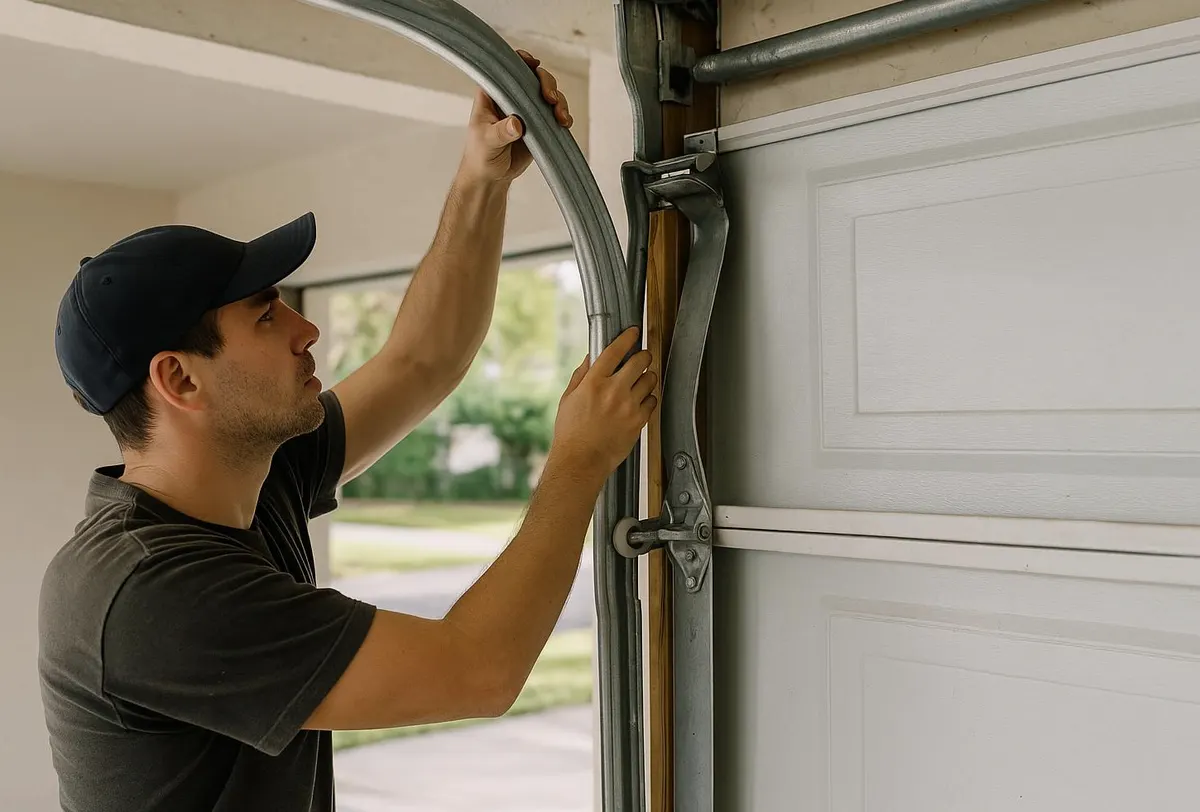
- Loose or missing track brackets — give the vertical track a gentle shake; it shouldn't move independently of the wall.
- Worn or cracked rollers that let the door rattle side to side instead of running smoothly.
- Gaps in the weatherstripping along the bottom and sides, which let wind-driven rain push through.
- A door with no horizontal reinforcement struts on the back of the panels — common on older installations and one of the first things to fail under wind load.
Practical Steps to Brace Your Door
1. Tighten and Inspect the Hardware
Go section by section and check every hinge, bolt, and roller bracket. Vibration and daily use loosen these over time, and a loose hinge under wind load is where panel separation usually starts. A cordless drill and the right socket size will handle most of this in under an hour.
2. Add or Check Reinforcement Struts
Horizontal struts bolted to the back of each panel distribute wind pressure across the whole door instead of letting it concentrate on one weak section. If your door doesn't have them, this is one of the most cost-effective upgrades available, typically well under $300 in materials for a standard two-car door, installed professionally for a bit more.
3. Check the Track Alignment
Tracks that are bent, bowed, or pulling away from the wall will let the door jump off its rollers exactly when it's under the most stress. Look down the length of each track from the floor — it should run perfectly straight and parallel to the opening.
4. Reseal and Weatherstrip
Wind-driven rain doesn't need a big gap to get in — a worn strip of rubber along the bottom is enough. Replacing weatherstripping is cheap and fast, and it keeps both water and dust out during the drier, windier stretches between storms.
5. Plan for Power Loss
Severe storms knock out power, and a garage door with no manual release plan or battery backup becomes a locked door exactly when you might need to get a vehicle out. If you don't already have one, a battery backup opener is worth the investment, and knowing where your manual release cord is located matters just as much.
Hail and Debris: The Other Half of the Problem
Beyond wind pressure, Houston-area storms bring hail and airborne debris that dent panels, crack windows set into the door, and chip away at painted finishes. Steel doors handle this better than older wood or thin aluminum panels. If your door already has noticeable dents or soft spots from past storms, those are weak points that will fail faster the next time severe weather rolls through.
When to Call Houston Garage Door Pro
If you've gone through this checklist and found loose brackets you can't fully tighten, a track that's visibly bent, or a door with no reinforcement struts, it's time to bring in a professional rather than guess. Our Garage Door Maintenance service covers a full inspection of tracks, rollers, hinges, and hardware, with adjustments made on the spot before storm season gets going. If a spring has already started showing signs of wear — uneven door movement, a door that feels heavier than usual, or visible gaps in the coil — our Spring Replacement service handles that safely, which isn't a DIY job given how much tension these parts hold under load.
And if a storm has already hit and your door won't open, won't close, or is visibly damaged, our Emergency Garage Door Service is built for exactly that situation, with technicians who can get to homes across Houston, Spring, Cypress, Tomball, The Woodlands, Humble, Katy, and Klein quickly.
Don't wait for the next cold front to find out your garage door isn't ready for it. Call Houston Garage Door Pro today to schedule an inspection and get your door storm-ready before the weather turns.