
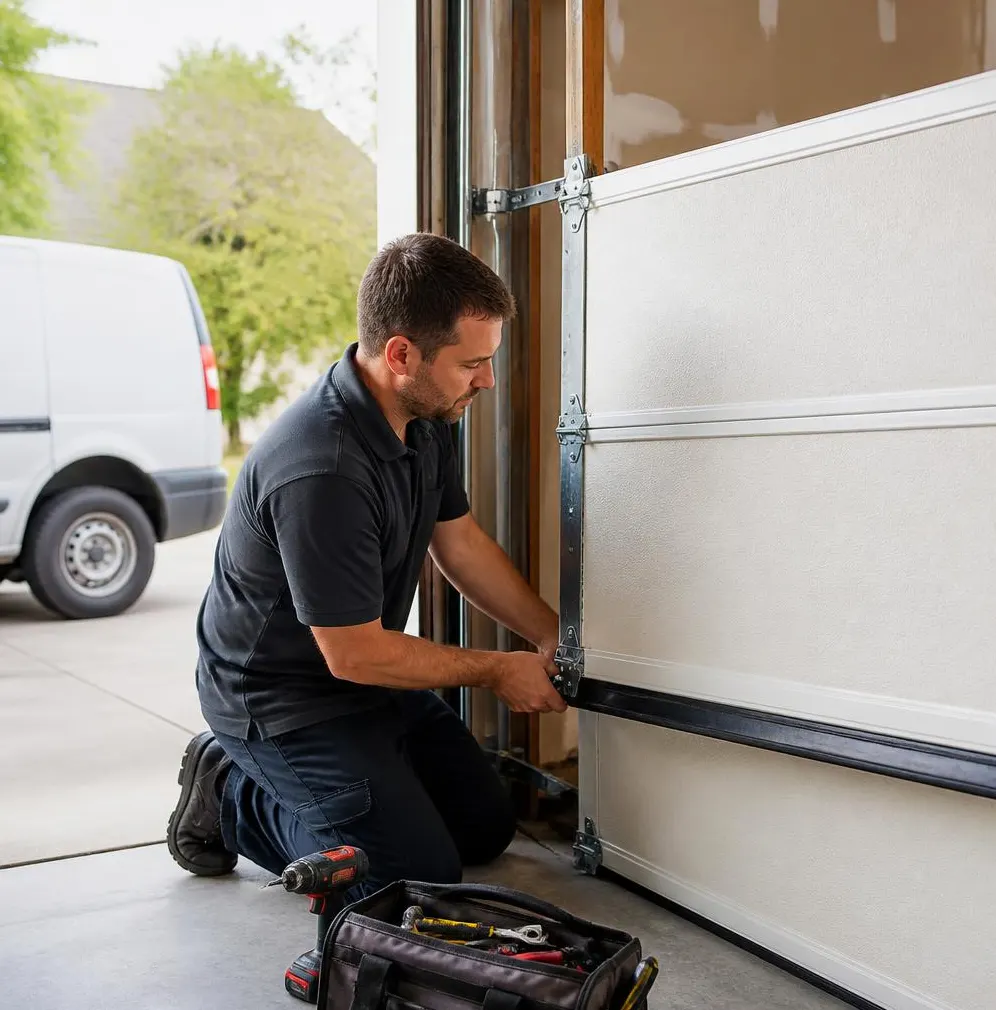
Here's the move almost everyone tries first: the garage door won't close, the little lights on the sensors are blinking instead of glowing steady, and it's getting dark or starting to rain. So you grab a zip tie, some electrical tape, or just unplug the sensor wires at the opener and force the door to run on "manual." It works. The door closes. Problem solved, right?
It's tempting because it's fast and free, and because most people don't actually understand what those two little boxes near the floor are doing. But bypassing them doesn't fix anything—it just removes the one safety feature standing between a closing door and whatever happens to be underneath it.
What Photo-Eye Sensors Actually Do
The two sensors mounted a few inches off the garage floor, on either side of the track, send an invisible infrared beam across the opening. As long as that beam is unbroken, the door is allowed to close. If something—a pet, a bike tire, a kid, a box that slid out of place—breaks the beam, the door is supposed to stop and reverse immediately. This is a federally mandated safety feature on every residential opener sold since the 1990s, and it exists because garage doors are heavy enough to cause serious injury or worse.
When the sensors are dirty, misaligned, or wired loosely, the opener sees a broken or inconsistent beam and refuses to close the door at all, even with nothing in the way. That's annoying, but it's the system working as designed—it's telling you something is wrong with its ability to "see," not giving you permission to disable it.
Why Sensors Trip in the First Place
- Dust and pollen film: Gulf Coast humidity combined with dry, dusty stretches leaves a hazy residue on the lenses that blocks the beam just enough to cause intermittent failures.
- Knocked-out alignment: A bumped bracket from a bike, a mower, or storm debris after one of our sudden fall squalls can shift a sensor by just a few degrees—enough to break the connection.
- Low sun angle: As days get shorter heading into winter, early morning or late afternoon sun can shine almost directly into a receiver eye and wash out the signal, causing the door to misbehave at the same time every day.
- Spiderwebs and insect nests: The small housing around each lens is a favorite spot for spiders and wasps, especially after warm, humid stretches.
- Condensation: Big swings between warm days and cooler nights can fog the lens surface temporarily.
- Loose or chewed wiring: Vibration, lawn equipment, or pests can fray the low-voltage wires running to each sensor.
How to Clean and Align Them Yourself
- Disconnect opener power at the wall outlet or breaker before touching anything.
- Locate both sensors, usually six inches or less above the floor on each track.
- Wipe each lens gently with a soft, dry microfiber cloth. If needed, lightly dampen it with water—avoid glass cleaners or anything that leaves a film.
- Clear away any webs, dirt, or debris from the housing and bracket.
- Restore power and watch the indicator lights. Both should glow solid; a blinking light means that sensor isn't receiving the beam.
- If a light is blinking, loosen the wing nut or mounting screw and tilt the sensor slightly until both lights turn solid. Small adjustments matter here—an eighth of an inch can make the difference.
- Run the door and wave a broom handle through the beam partway through closing to confirm it reverses properly.
Why You Should Never Bypass Them
Running a jumper wire, taping the sensors together, or disconnecting them entirely tells the opener to ignore the safety beam completely. The door will close on anything in its path—a pet, a child, a parked bike, your own foot—without stopping. It's also harder on the system itself, since objects caught under a non-reversing door can damage opener gears, door panels, and tracks. There's no situation where the time saved is worth that risk.
When to Call Houston Garage Door Pro
If you've cleaned the lenses, double-checked alignment, and the door still won't close reliably—or the sensors look fine but the door reverses randomly—the issue may be deeper wiring damage or a failing opener logic board. Our Garage Door Opener Repair & Installation service covers diagnosing and replacing faulty sensors, wiring, and circuit boards, and our Garage Door Maintenance visits catch alignment drift and wear before it turns into a no-close emergency.
If your garage door in Houston, Spring, Cypress, Tomball, The Woodlands, Humble, Katy, or Klein isn't closing the way it should, give Houston Garage Door Pro a call—we'll get it diagnosed and running safely again.