
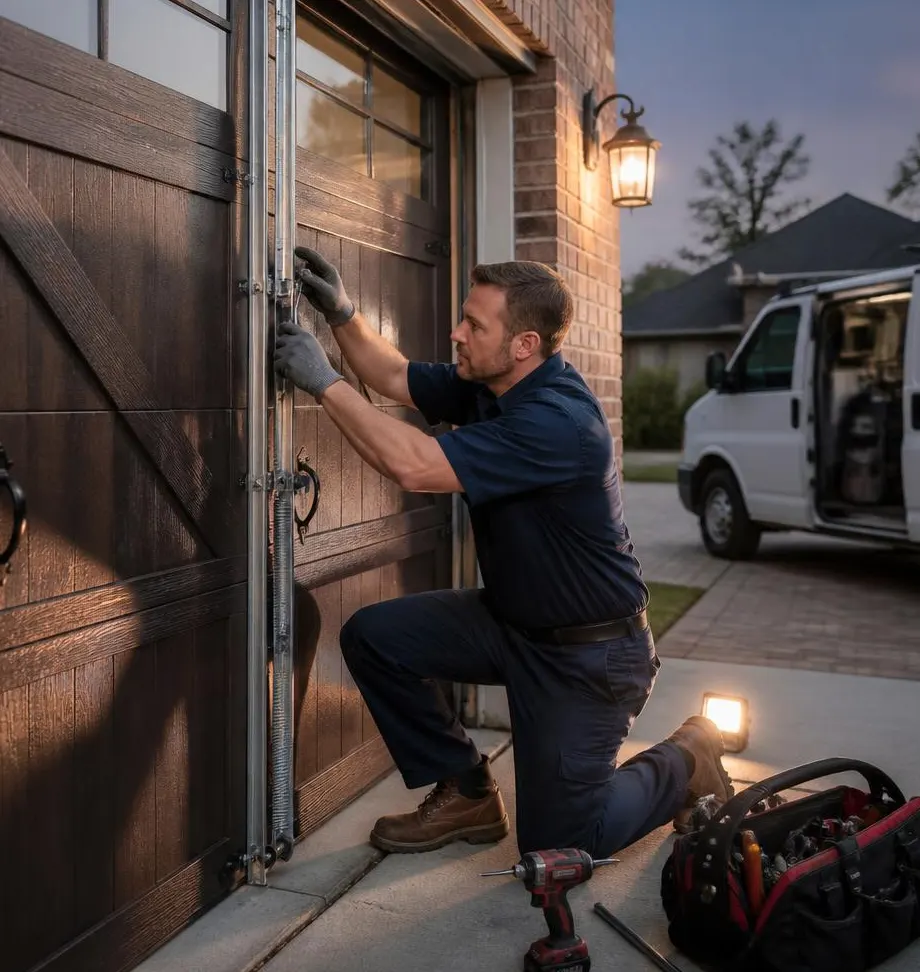
The Short Answer
Getting your garage door ready for winter in the Houston area means three things: reseal the gaps that summer heat opened up, lubricate the hardware before temperatures start swinging, and make sure your opener has a plan for power outages during storms. None of this takes a full weekend, but skipping it is how homeowners end up with a stuck door or a snapped spring on the one cold morning a year when they actually need the door to work.
Why Houston Winters Are Harder on Garage Doors Than People Expect
Houston doesn't get brutal winters, but that's actually part of the problem. A long hot summer bakes rubber seals, dries out lubricant, and lets dust and grit work into the tracks and rollers. Then fall and winter bring sudden cold fronts, heavy rain, high wind, and, especially in Spring, Tomball, The Woodlands, and other spots north of the city, the occasional ice event. A door that's been quietly wearing down all summer doesn't have much left to give when the temperature drops 30 degrees overnight.
1. Check and Replace Weatherstripping
The rubber seal along the bottom of the door and the strips along the sides take the brunt of summer UV exposure and heat. By October, a lot of it is cracked, flattened, or pulling away from the track, which means cold air, wind-driven rain, and dust can get into the garage.
- Run your hand along the bottom seal. If it's stiff, cracked, or has gaps where light shows through, replace it.
- Check the side and top seals for the same brittleness.
- Replacement weatherstripping is inexpensive and a reasonable DIY job if your door uses a standard track-style seal.
This matters more than it sounds like for a mild climate. A gap at the bottom of the door lets in wind-blown rain during a storm and lets heat escape if your garage is attached and conditioned.
2. Lubricate Rollers, Hinges, and Tracks
Summer dust and grit mix with old lubricant to form a gritty paste that grinds down rollers and hinges. Before cold weather sets in and metal contracts slightly, clean and relubricate the moving parts.
- Wipe down the tracks with a dry cloth to remove built-up dust and debris.
- Use a silicone-based garage door lubricant on the rollers, hinges, and springs. Avoid WD-40 as a long-term lubricant since it attracts dust rather than repelling it.
- Listen for grinding or squealing during operation afterward. If it persists, a roller or hinge may need replacing, not just oiling.
3. Inspect the Springs Before Cold Snaps Add Stress
Garage door springs do most of the physical work of lifting the door, and metal behaves differently as temperatures swing. A spring that's been slowly weakening all summer can fail outright the first time a cold front tightens it up. Warning signs include:
- The door feels heavier than usual when opened manually.
- A visible gap in the spring coil, or the spring looks stretched.
- A loud bang from the garage, which is often a spring snapping.
Springs are under high tension and are not a safe DIY repair. If you notice any of these signs, that's a job for spring replacement before winter, not after a failure strands your car inside.
4. Prepare the Opener for Storm Season Outages
Fall and winter in this part of Texas still bring sudden severe storms, wind, and the kind of power blips that come with them. If your opener doesn't have a battery backup, a storm-related outage means manually releasing the door, which isn't convenient if you're heading out in bad weather.
- Check whether your opener model supports a battery backup unit, and consider adding one if it doesn't already have it.
- Test the manual release handle now so you know it works smoothly, not during an emergency.
- Replace opener remote batteries since cold mornings are a common time to discover a dead remote.
5. Address Gaps and Insulation if Ice Is a Realistic Concern
Homes further north, around Tomball, Spring, and The Woodlands, occasionally see ice in winter. If your garage is attached to the home or used as workspace, an insulated garage door panel or added weatherstripping helps keep that cold from creeping into adjoining rooms. Even a non-insulated door benefits from a tight bottom seal, since that's the main place cold air and moisture get in.
6. Test the Door's Balance
With the opener disconnected, lift the door halfway by hand. It should stay in place on its own. If it drifts down or shoots up, the spring tension is off, which puts extra strain on the opener motor and increases the odds of a spring failure during a cold snap. This is a quick test but not a DIY fix, since it ties back to spring tension.
When to Call Houston Garage Door Pro
If weatherstripping replacement and lubrication solve the problem, great. But if you're seeing a weak or snapped spring, a door that won't balance, grinding that doesn't go away with lubricant, or an opener that needs a battery backup installed, that's when it's worth bringing in a professional. Houston Garage Door Pro handles spring replacement, garage door maintenance, and opener repair and installation for homeowners across Houston, Spring, Cypress, Tomball, The Woodlands, Humble, Katy, and Klein, and we can get a seasonal check done before the first real cold front arrives.
If your garage door isn't ready for winter weather, give Houston Garage Door Pro a call. We serve homeowners throughout the Houston, TX area and we're ready to help before the next cold snap or storm rolls through.